


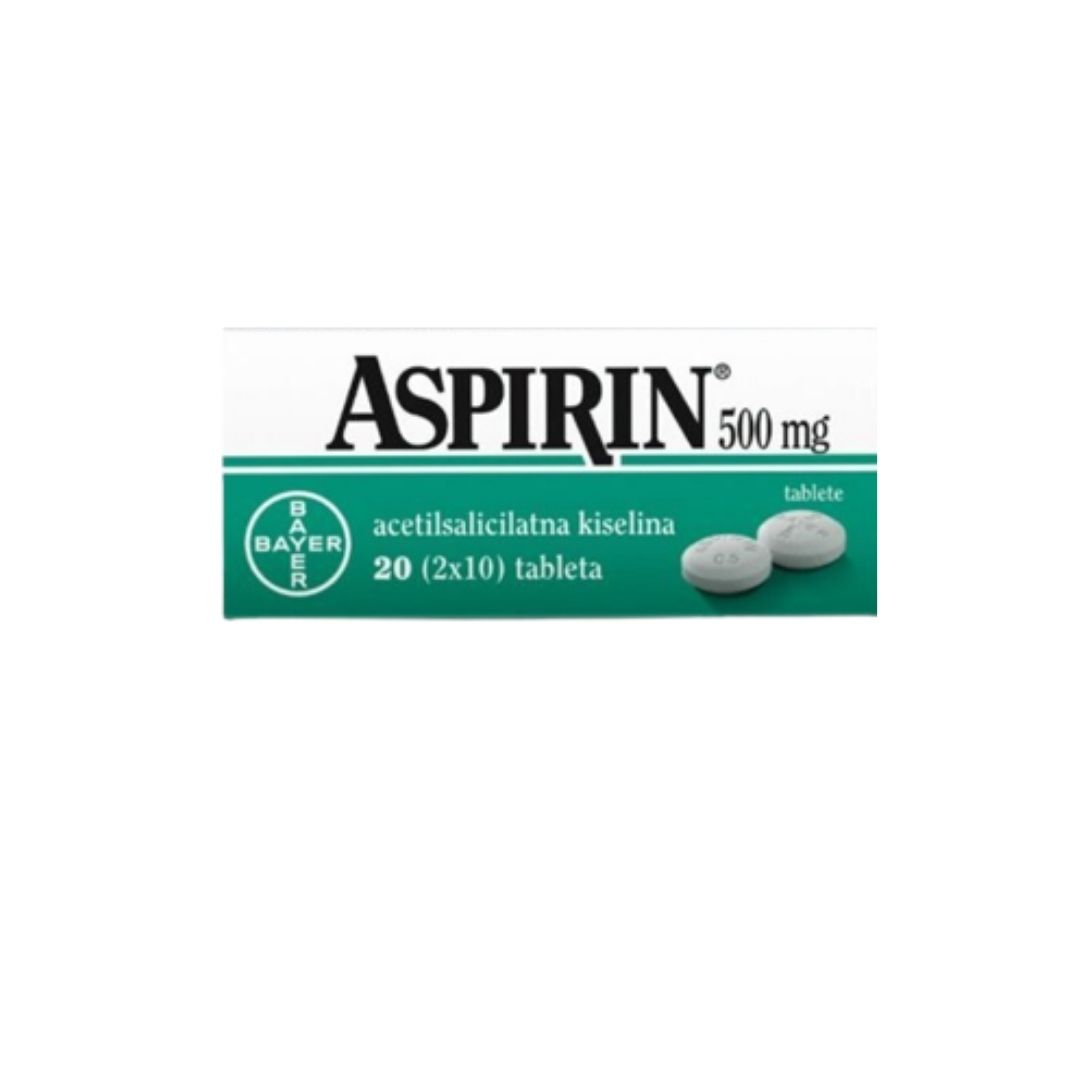
Description
Aspirin has analgesic, antipyretic and anti-inammatory properties (nonsteroidal anti-inammatory /analgesic).
Aspirin is indicated for:
– Mild to moderate pain such as headache, dental pain, period pain, painful symptoms associated with colds (e.
g.
headache, sore throat, aching limbs).
– Fever.
Aspirin must not be used:
– if you are hypersensitive (allergic) to acetylsalicylic acid, other salicylates, ascorbic acid or any of the other ingredients of Aspirin;
– if you have a history of reacting hypersensitively to special drugs against pain, fever or inammation (salicylates or other nonsteroidal anti-inammatory drugs) with asthma attacks or the like;
– if you have acute gastric or duodenal ulcers;
– if you have a pathologically increased tendency to bleed;
– if you have liver or kidney failure;
– if you have severe, non-stabilized heart failure (cardiac insufficiency);
– if you are concurrently taking 15 mg or more methotrexate per week;
– during the last trimester of pregnancy.
AdolescentAspirinshould not be taken by adolescents with feverish illnesses unless they have been instructed to do so by a doctor and other therapeutic measures have failed.
Prolonged vomiting in conjunction with such illnesses could be a sign of Reye’s syndrome, a very rare but lifethreatening disease which requires immediate medical attention.
Pregnancy and lactationBefore taking any medicines consult your doctor or pharmacist.
Aspirin should not be taken during the first and second trimester of pregnancy.
Consult your doctor before taking Aspirin.
Acetylsalicylic acid, the drug substance of Aspirin must not be taken during the last trimester of pregnancy due to an increased risk of complications for mother and babybefore and during the birth.
This medicine belongs to a group of drugs (non-steroidal antiphlogistics) which could impair woman’s fertility.
This effect is reversible following discontinuation of the medication.
The drug substance acetylsalicylic acid and its derivatives will pass in little amounts into the milk.
It is not necessary to interrupt breast-feeding for short-term use at therecommended dosage because there are no known effects on the baby.
However, in case of long-term or high-dose usage, the infant should be weaned.
Common side effects:
Gastrointestinal disorders such as heartburn, nausea, vomiting, abdominal pain.
This is an OTC medicine, so it can be taken without a doctor’s recommendation.
Before using this medicine carefully read the package leaflet as it contains more detailed information.
Consult your doctor or pharmacist for any doubt.
Usage
Unless otherwise prescribed by your doctor, the usual dose is:
-Children above 12 years:
single dose 1 tablet, daily dose 3 tablets.
-Adults 1-2 tablets (single dose), 3-6 tablets (daily dose).
Take Aspirin with plenty of water.
To facilitate the intake you should disintegrate the tablet on a spoon in some water.
Please afterwards drink plenty of water.
You should not take Aspirin on an empty stomach.
The single dose can be taken at intervals of 4 to 8 hours if necessary, up to a maximum of 3 doses a day.
The maximum daily dose must not be exceeded.
Do not take Aspirin-C for longer than 4 days without consulting your doctor or dentist.
Ingredients
acetylsalycilic acid, maize starch, cellulose powder
Informacion Shtese
| Veprimi | analgesic ,anti-inflammatory ,antipyretic |
|---|---|
| Marka | Bayer |
| Formulimi | tablet |
| Masa | 20 tablets |
| I përshtatshëm për | adults |
SKU: 2316 Categories: Bayer, Circulatory system, OTC ORALE (Copy) Tags: adults, anti-inflammatory, aspirin, Bayer, pain, temperaturë


