


Visited Products
-
 Cerave Hydrating Foaming Oil Cleanser 1680 L – 2040 LPrice range: 1680 L through 2040 L

Description
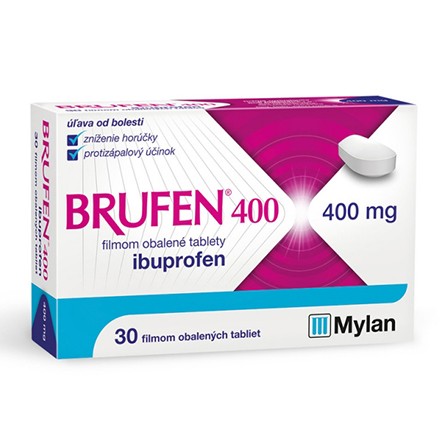
IndicationsBrufen is indicated for its analgesic and anti-inflammatory effects in the treatment of rheumatoid arthritis (including juvenile rheumatoid arthritis or Still’s disease), ankylosing spondylitis, osteoarthritis and other non-rheumatoid (seronegative) arthropathies.
In the treatment of non-articular rheumatic conditions, Brufen is indicated in periarticular conditions such as frozen shoulder (capsulitis), bursitis, tendonitis, tenosynovitis and low back pain;
Brufen can also be used in soft tissue injuries such as sprains and strains.
Brufen is also indicated for its analgesic effect in the relief of mild to moderate pain such as dysmenorrhoea, dental and post-operative pain and for symptomatic relief of headache, including migraine headache.
ContraindicationsBrufen is contraindicated in patients with hypersensitivity to the active substance or to any of the excipients.
Brufen should not be used in patients who have previously shown hypersensitivity reactions (e.
g.
asthma, urticaria, angioedema or rhinitis) after taking ibuprofen, aspirin or other NSAIDs.
Brufen is also contraindicated in patients with a history of gastrointestinal bleeding or perforation, related to previous NSAID therapy.
Brufen should not be used in patients with active, or history of, recurrent peptic ulcer or gastrointestinal haemorrhage (two or more distinct episodes of proven ulceration or bleeding).
Brufen should not be given to patients with conditions involving an increased tendency to bleeding.
Brufen is contraindicated in patients with severe heart failure (NYHA Class IV), hepatic failure and renal failure.
Brufen is contraindicated during the last trimester of pregnancy .
In the limited studies so far available, NSAIDs can appear in the breast milk in very low concentrations.
NSAIDs should, if possible, be avoided when breastfeeding.
Side effectsThe most commonly observed adverse events are gastrointestinal in nature.
Peptic ulcers, perforation or GI bleeding, sometimes fatal, particularly in the elderly, may occur.
Nausea, vomiting, diarrhoea, flatulence, constipation, dyspepsia, abdominal pain, melaena, haematemesis, ulcerative stomatitis, gastrointestinal haemorrhage and exacerbation of colitis and Crohn’s disease have been reported following ibuprofen administration.
Less frequently, gastritis, duodenal ulcer, gastric ulcer and gastrointestinal perforation have been observed.
Immune system disorders:
Hypersensitivity reactions have been reported following treatment with NSAIDs.
These may consist of (a) non-specific allergic reaction and anaphylaxis, (b) respiratory tract reactivity comprising asthma, aggravated asthma, bronchospasm or dyspnoea, or (c) assorted skin disorders, including rashes of various types, pruritus, urticaria, purpura, angioedema and, very rarely, erythema multiforme, bullous dermatoses (including Stevens- Johnson syndrome and toxic epidermal necrolysis).
Cardiac disorders and vascular disorders:
Oedema, hypertension and cardiac failure have been reported in association with NSAID treatment.
Clinical studies suggest that use of ibuprofen, particularly at high dose (2400 mg/day) may be associated with a small increased risk of arterial thrombotic events such as myocardial infarction or stroke.
Infections and infestations:
Rhinitis and aseptic meningitis (especially in patients with existing autoimmune disorders, such as systemic lupus erythematosus and mixed connective tissue disease) with symptoms of stiff neck, headache, nausea, vomiting, fever or disorientation.
This is an OTC drug, so it can be taken without a doctor’s recommendation.
Before using this medicine read carefully the package leaflet as it contains more detailed information.
For any uncertainty consult your doctor or pharmacist.
Usage
Adults and children over 12 years of age:
The recommended dosage of Brufen is 1200-1800 mg daily in divided doses.
Some patients can be maintained on 600-1200 mg daily.
In severe or acute conditions, it can be advantageous to increase the dosage until the acute phase is brought under control, provided that the total daily dose does not exceed 2400 mg in divided doses.
Children:
The daily dosage of Brufen is 20 mg/kg of body weight in divided doses.
For young children, more suitable formulations are available.
In Juvenile Rheumatoid Arthritis, up to 40 mg/kg of body weight daily in divided doses may be taken.
Not recommended for children weighing less than 7 kg.
Elderly:
The elderly are at increased risk of serious consequences of adverse reactions.
If an NSAID is considered necessary, the lowest effective dose should be used and for the shortest possible duration.
The patient should be monitored regularly for GI bleeding during NSAID therapy.
If renal or hepatic function is impaired, dosage should be assessed individually.
Ingredients
Ibuprofen, Microcrystalline cellulose, Croscarmellose sodium, Lactose monohydrate, Colloidal anhydrous silica, Sodium laurilsulfate, Magnesium stearate, Extragranular excipients:
Opaspray white M-1-7111B*, Dry colour dispersion, white 06A28611**, *Opaspray white M-1-7111B comprises industrial methylated spirit, purified water, hypromellose 2910 and titanium dioxide** or combination of Opaspray white M-1-7111B, hypromellose and talcNB industrial methylated spirit and purified water are removed during the drying process
Informacion Shtese
| Veprimi | analgesic ,anti-inflammatory ,antipyretic |
|---|---|
| Marka | Mylan |
| Formulimi | tablet |
| Masa | 30 tablets |
| I përshtatshëm për | adults |
SKU: A14 Categories: Analgesics and antipyretics, Dhimbje, Mylan, OTC ORALE (Copy) Tags: adults, analgesic, anti-inflammatory, antipyretic, ibuprofen


